5 Essential Tools You Need In Your Sewing Kit
Apart from a good sewing machine, needle, thread, and spools, there are various other essential sewing tools that you’ll need to keep handy when you are sewing. It’s best to get these essentials when you start this beautiful craft, and be fully prepared when you feel the need to try your first sewing project.
Here is what we think are a couple of sewing tools that you should definitely have in your sewing kit:
- fabric scissors (or shears?)
- rotary cutter, ruler, and cutting mat
- seam ripper
- sewing clips
- heat-erasable fabric markers
Read on to discover why we think these are essential!
1. Fabric Shears or Fabric Scissors

Yes, fabric shears are one of the most important items that you’ll need to stock in your sewing kit. It’s important to keep them separate and not use them for any other projects apart from sewing as their blades can dull out and end up damaging the fabric. It is also important to invest wisely in them instead of opting for the cheapest ones as good ones can last you for a long time.
What is the difference between fabric shears and fabric scissors?
Traditionally, tailors and seamstresses have distinguished between fabric shears and scissors based on two key features: shears have longer blades and asymmetric finger holes (one larger than the other). However, with the wide variety of cutting tools available today, these distinctions have become less definitive.
At Madam Sew, we recognize that different sewing tasks require different tools. Our popular golden shears (9 inches) feature long, ultra-sharp blades designed specifically for cutting fabric, but we've found they're not ideal for every job. Some sewers find them too heavy for extended use or impractical for detailed work. That's why we've expanded our collection to include spring scissors, electric fabric scissors, and soon, a smaller pair of fabric scissors (7.5 inches) that will give our customers more versatility for delicate tasks.
2. A Rotary Cutter, a Clear Ruler and Cutting Mat
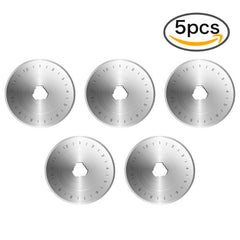
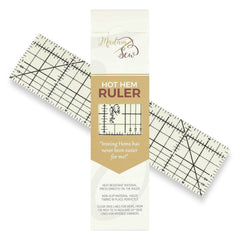
Rotary cutters are well known among quilters but they can be useful in cutting out patterned fabrics and are often much faster than fabric scissors. They are easy to use. The blades need to be sharp for the best results. Blades can be easily replaced. Know that when you want to cut fabric with a rotary cutter, you also need a cutting mat and a clear cutting ruler.
When using a rotary cutter, always roll away from your body. Never cut in a ‘backward’ direction (towards yourself), as this can be very dangerous. It’s also crucial to keep your fingers away from the cutter. If you are a righty, hold the ruler with your left hand while cutting down the right side of the ruler. Lefties can do the opposite.
Check these blogs to read all about selecting a rotary cutter, tips and tricks, and cutting with a rotary cutter safely and accurately.
3. Seam Ripper
Mistakes do happen to the best of us – and this little tool can be of big help during those tough times. This simple seam-ripping tool can help you cut and remove unwanted stitches easily. You need a seam ripper, believe me, more than one! Removing stitches with scissors or a knife or whatever tool you think you can use, is not as efficient as the seam ripper. If you have a hard time seeing the stitches clearly, you can also use a lighted seam ripper. It has a little light that illuminates those little dark stitches that are sunk into your fabric.
Apart from its obvious use, a seam ripper can also be used to cut open buttonholes, as well as to turn out tiny corners (using the back end, of course, if not, you will damage your fabric)! It can also come in handy when you need to open a slit into an applique fabric (not in the main fabric underneath). Learn more about seam ripping in this blog tutorial. Now that’s value for money!
Make sure that you invest in one that comes with a sturdy and comfortable handle.
4. Sewing Clips

Yes, we know what all the pin-lovers are thinking! But these little sewing clips are much easier and safer to handle! They are extremely useful to hold layered sections without distortion. As they come with flat backs and flat sides – they can be used to hold fabric at a flat angle so that the hem or edge doesn't pucker or wrinkle up. The major advantage of investing in these is that you can even use them for fabrics such as laminate, leather, vinyl, silk, and satin wherein using pins is not suitable.
Now that’s a win-win situation!
5. Fabric Markers

Every sewing tool kit should have fabric markers to mark notches and lines on fabric. Yes, you can use traditional products such as tailor chalk, tracing carbon paper, and tracing wheel or ceramic lead pens. But aren’t we all a little tired of them breaking, being less visible, or fading away too soon? This is where these smart heat-erasable marker gel pens can act as a lifesaver! The unique gel ink of these pens makes clear marks on fabrics and disappears after ironing. Their sharp and accurate writing point leaves a thin yet clear line on every kind of fabric (yay!) Now you wouldn’t have to worry about your lines fading away when you don’t want them to or smudging/spoiling the rest of your fabric! How amazing is that?
Looking for a complete guide to start sewing and more background information and useful insights? Check out our Beginner Series for Sewing on the Madam Sew Sewing Blog and learn to sew at your own pace. We also have a guide about sewing tools and their uses that helps you use your tools better and discover new ones.
Or maybe you are looking for more advanced tools, now that your sewing essentials are in place? Then it’s time to check out the products on MadamSew.com that can help you become a master sewer. Go to this blog with more nifty tools that you might not know yet, or this video about the sewing tools you didn't know you needed, or find more sewing tools here!
Do let us know if you think any other essentials should be added to this list! 😊
Happy Sewing!
An
Blogging for Madam Sew