How I Organize My Sewing Room in Zones
There is a particular kind of frustration that every sewist knows. You sit down at your sewing machine, ready to sew, and within ten minutes you have lost five. The bobbin you need is not in the drawer. The seam ripper disappeared somewhere between last Tuesday and now. The cutting table (or kitchen table, of the corner of the spare bedroom that you use as your craft space) has accumulated a pile of things that have nothing to do with sewing, and you cannot find your rotary cutter.
The problem is probably not that you are completely disorganized. Maybe your sewing room does not have a system that holds up under the pressure of sewing in it. And whether you have a dedicated sewing room, a corner of a shared space, or a setup that comes out on the kitchen table and gets packed away again after every session, the solution is the same: a clear zone for each activity, and a dedicated home for everything within it.
Not every idea in this guide will apply to every setup. If you sew on the kitchen table, a wall-mounted pegboard is probably not your next purchase. But the organizing principles work at any scale. I will flag along the way which solutions are particularly useful if you are working with limited or shared space.
In this guide, I want to walk you through the system I use in my own sewing room. Not a picture-perfect studio with matching storage boxes and a ring light, but a real working space that I work and sew in every day. The zones I describe here are the ones that made the biggest difference for me, and maybe they will for you too, whatever your setup looks like.
A Quick 15-Minute Reset
Before you think about any storage solutions, do one thing: spend fifteen minutes on a quick reset. Not a destash, not a deep clean, just a surface clean-up of your sewing space. Clear the tables, put like with like, and notice what does not have a home. That last part is the most useful. The things that are always in the wrong place are usually the things that do not have a right place yet.
If you find yourself staring at a fabric pile that has grown beyond manageable, that is a separate project. I have a full guide to destashing and organizing your fabric stash that walks through that process step by step. Bookmark it for after you have set up your zones.
For now, after a dedicated fifteen minutes, the surfaces are clear, and you have a rough sense of the tools or notions that don’t have a home yet.
Zone 1: The Sewing Machine Area
This is the zone where I start, because it is where the magic happens and where a small amount of chaos causes a big amount of frustration.
The key principle for Zone 1 is the difference between working supplies and stash supplies. Working supplies are what you need actively and within arm's reach while you are actually sewing: your current thread, a seam ripper, small scissors, pins, a sewing stiletto. Stash supplies like your full thread collection, your notions, your spare blades, they should live somewhere else. We will get to those in Zone 4.
The mistake most sewists make is keeping too much at the machine. When everything is within reach, nothing is actually findable. Your table or sewing machine area becomes too crowded and gets messy really quickly.
For what genuinely belongs at the machine, you need two things. First, something upright that holds your most-used tools visibly, I use the Upstanding Tool Caddy for scissors, my seam ripper, stiletto, a fabric marker, a measuring gauge, tweezers, a sewing machine brush and a pair of thread snips. Everything standing up, everything visible, nothing buried under anything else. Second, a good pincushion within easy reach for pins and hand needles, and a little basket with sewing clips.
That is it for Zone 1. Deliberately minimal. If it does not get used at the machine every single session, it does not live here.
After every sewing session put the pins back on the pincushion, store away the thread bobbins and spools you used and remove small thread ends and fabric cut-offs from the table and the floor. I have a hanging scrap bin that helps keep this area clean more easily.
Zone 2: The Cutting Table
The cutting table is the zone most likely to become a dumping ground, and for one simple reason: it is a large flat surface, and large flat surfaces attract things that do not belong there.
The discipline here is straightforward. Clear it completely before you start and when you finish a cutting session. But beyond this habit, the table also needs proper homes for the tools that genuinely live there, so that clearing it actually means clearing it rather than shuffling things into a pile.
Four things that you can find on my cutting table:
- Cutting mat(s)
- Scissors
- Rulers
- Fabric Markers
A cutting mat doesn’t live on my cutting table, I must admit. I suppose for quilters it does. When I’m drafting or copying patterns for bags or clothing, marking and cutting fabric pieces with scissors, I move the large cutting mat to the floor (temporarily) or hang it on the wall. I own a very large cutting mat and a small rotating cutting mat that both get a lot of use when I’m batch cutting smaller fabric pieces. The small mat is stored on a low shelf together with my wool pressing mat when not in use.
Scissors benefit from being in an upright position, for safety and for protecting the blades and the tip. Using a scissor stand keeps all your scissors visible and accessible. It doesn’t take up too much space and the scissors won’t end up under a pile of fabric. Grabbing them and storing them away is fast, which helps with being consistent and keeping my cutting table organized.
Rulers are probably the biggest surface thief on the cutting table. A Ruler Rack holds them all vertically. They take up less space, are easy to grab and they are visible.
I’m not using rotary cutters daily but if you do, I would suggest hanging them next to the table on a peg board for example. They need to be safely stored when you are not actively cutting. A dedicated rotary cutter case can hold the cutters and spare blades together, nothing loose, nothing rolling off the table, no accidental blade contact when you reach across.
A note on the pegboard: my board lives next to my sewing machine, not at the cutting table and it holds both tools that I need regularly but also zone 3 and 4 stuff. Depending on your room layout, a peg board can work equally well in the cutting area or serve both zones if it is positioned between them. I will cover the full pegboard setup in Zone 3.
Zone 3: The Wall and Vertical Storage Principle
Wall space is often an underused resource in sewing rooms.The good news is that it works at any scale. You don’t even need a dedicated sewing room to use your walls. A single section of wall, a door, or even the side of a shelving unit can hold a lot of tools, notions, sewing supplies.
The key thing to understand about vertical storage is that it is not a separate zone. It is an extension of the zone it sits next to. A thread rack mounted next to your sewing machine becomes part of Zone 1. A pegboard next to your cutting table becomes part of Zone 2. Pegboards are modular, which means you configure it for your specific tools and your specific wall with the right amount of boards and accessories to hold your supplies (scissors, rulers, accessories, small notions jars, whatever you reach for most in that zone). If you want to go deeper on pegboard setups, pegboard accessories let you build it out exactly the way you need.
Beyond the pegboard, think about what else your walls can hold. A thread rack frees up space on your shelf and lets you choose thread easily. Hooks on the wall can hold rulers, bags, or tools. An over-the-door organizer is one of my favorite solutions for small spaces. It uses the back of a door and keeps fabric cuts or notions visible and sorted without taking up any surface or shelf space at all.
If you are sewing on a kitchen table or in a shared space and wall storage is not an option, do not skip this section entirely, just apply the principle differently. A small freestanding pegboard, a tabletop tool caddy, or a single hook on the back of a chair can help you set up and clean your sewing station faster than before.
Zone 4: The Ironing Area
Pressing is not an afterthought in sewing, it is part of the entire process. A well-pressed seam turns a project that looks homemade into one that is handmade with care. Your ironing area deserves to be set up as intentionally as any other zone.
In my setup, the iron and ironing board have their own little table that has some shelves underneath. The tools I reach for most live on the table, hang on the ironing board, or store-flat underneath the table. The key is keeping this zone self-contained so you are not walking back to the machine or the cutting table every time you need something mid-pressing session. You could also use another peg board instead of a little table or shelves. A lot of ironing boards hold the iron easily, which is the biggest tool that needs a home in that area.
My wool pressing mats are also stored here. I use these mats on the ironing board but also move them next to my sewing machine when I’m batch sewing. When I do the sewing table setup for pressing, I like to use a mini iron and the small mat (depending on the sizes of seams that need to be pressed).
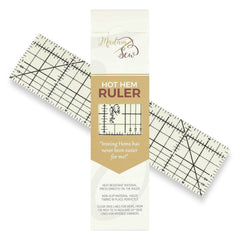
For ironing delicate fabrics, a non-stick pressing sheet sits in my iron board organizer. I made this myself and shared the full tutorial here: How to Make an Ironing Board Organizer. I also have a clapper to give certain seams or hems an extra press for extra crispness. There’s my tailor’s ham and a mini iron board for curved parts and sleeves, some starch, glass head pins, a hot hem ruler. A mini iron also lives on the table next to the main iron in my room.
Zone 5: The Supplies Area: Fabric, Thread, Notions and Stash
This is the zone where most of the stuff lives: the fabric stash, the threads, the spare notions (zippers, buttons, elastics, trims,...), the project-specific supplies and the tools you don’t need for every single sewing session. In my room this is all in the same physical area: some shelving units with boxes, baskets, folders, binders, clear containers, and bags. Yours might be a dedicated closet, a set of drawers, or a section of open shelving.
The organizing principle here is the same regardless of your setup: same area, separate homes. Everything in this zone can share the same corner of the room (or even another room), but each category needs its own container. Mixing is what creates the chaos.
This is also where the distinction from Zone 1 becomes useful again. Only what you are currently using belongs there. Everything else belongs here, organized and findable.
Fabrics
For the fabric stash, start with what you actually love and will use. If that feels overwhelming, my guide to destashing and organizing your sewing supplies talks about how to approach it.
Large pieces of fabric, batting or stuffing need protection from dust, light, and moisture. I use quilt storage bags because they are breathable, protective, and can hold a lot of fabric. For smaller cuts and fat quarter collections, the over-the-door organizer is a space-saver but clear boxes on a shelf or square baskets can also work well for this. You can store the cuts by size, by fabric type, by color, depending on what you have and how you look for your fabrics. I tend to keep a lot of my scraps…the smaller ones are not organized, the larger ones are sorted by color in baskets. Another great way of storing fabrics is wrapping them around comic book panels and arranging those cardboard ‘bobbins’ and arranging them in a rack or a box. This works well for the middle-sized fabric pieces.
If you are quilting the quilt storage bags are a must to hold large quilt projects or finished quilts that you will gift later. Some extra tips on how to best treat, wash and store quilts, can be found in the blog named "How to Wash your Quilt".
Thread and Bobbins
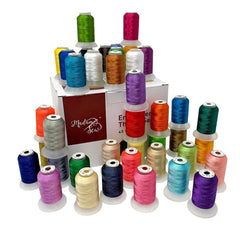
Thread belongs with the stash but should also be not too far from the sewing machine area, Zone 1. Your full thread collection needs a home where you can see everything at once. If it is hidden, you end up buying duplicates of colors you already own, or using a thread that is almost right because you cannot find the right one. And if you are switching threads in between projects, you want to find the right thread spool or bobbin fast. A thread rack can be both hung on the wall or used as a standing device on a table or a rack.
Bobbins are a separate problem. You always have some thread on a bobbin left after a project is finished and I find it hard to toss that thread. When it is loose in a tin or rolling around a drawer, it is hard to find the right color or thread type when you start a new project. You can use a clear bobbin box to see what thread you have or use spool & bobbin organizers to keep bobbins paired with their matching spools so you can find exactly what you need without hunting for a color. I have a full blog post on keeping thread spools and bobbins organized if you want to go deeper on this.
Project Notions and Stash Supplies
Trims, elastics, bias tape, buttons, spare rotary blades, spare needles, specialty threads bought for a specific project. These supplies do not belong in a shared bin where they get tangled, buried, and lost. Each type needs its own pocket or container, preferably a transparent one, so you can quickly see what you have and where it is on the shelf.
I have a full guide dedicated to organizing sewing notions specifically that goes into much more detail on what to keep where and why.
Specialty Tools and Occasional-Use Equipment
Every sewist accumulates tools that do not live at the machine or the cutting table permanently. These are the things you need when you need them. Specialty sewing machine needles, a 60mm Rotary Cutter for cutting through thick layers, Electric Fabric Scissors for long cuts, a Tube Turner Set for straps and ties, snap pliers, my Bird's Nest Toolkit for machine troubleshooting, a Body Self Measuring Tape for garment sewing, Pattern Weights for pattern cutting, etc.. If you have the Ultimate Presser Foot Set or a collection of individual presser feet, they also need to be stored efficiently so you can find the right foot without emptying the whole box.
All of these types of tools need a designated home. Group them by how you use them: cutting tools together, closure tools together, machine maintenance tools together. A shelf with small labeled bins or boxes works well. The Small Accessories Bag is a good option for grouping smaller tools within a drawer or shelf, clear enough to see the contents, compact enough to stack, stand upright or even hang. Larger tools can be stored in the Madam Sew Carry-All Sewing Organizer, which combines the functionality of a binder and a project bag. The seven built-in zip-close pockets will keep different tools, notions and material securely stored. The binder pockets hold patterns, instructions and small fabric pieces together.
Zone 6: Project Management
The last zone is less about physical storage and more about the system that ties everything together. If you sew more than one project at a time, and a lot of quilters and sewists do, you need a way to manage multiple works-in-progress without the projects bleeding into each other, taking up space on your work table or disappearing into a pile.
The system that works for me is simple: one project bag per project, and everything for that project lives inside it. The fabric, the pattern, the thread, the specific notions, any notes or measurements. When I sit down to work on a project, I grab the right bag and everything I need is in it. When I put it away, everything goes back in. Nothing migrates to the cutting table. Nothing gets mixed up with another project. You can have different types of project bags. There is our old-time favorite project bag that is perfect to hold quilt blocks but we are also launching a garment project bag that holds a larger garment project in a foldable garment bag. Will be in store in July 2026.
Combined with some clear bag tags on the zipper pull (in the store in July 2026) of each bag and the Madam Sew Maker's Hang Up Hooks to hang the bags on my little rack, every active project is hanging in the room, labelled, and visible. You can see at a glance what you have on the go, pick up the right bag in seconds, and put it back just as easily. A lot of new organizing tools are coming to the store. Very exciting!
This is the zone that makes all of the other zones hold up. Without it, the tools and supplies you have organized so carefully in Zones 1 through 5 start migrating back toward chaos as each new project scatters its pieces across the room.
You Do Not Need a Bigger Room
Everything I have described here, the six zones, a home for each category of tool, accessory and supply can be applied to a dedicated sewing studio or a corner of a spare bedroom. The room does not need to be bigger. It needs to be better organized.
The most useful thing you can do after reading this blog is to pick one zone and set it up this week. You do not need to tackle everything at once. Start with Zone 1, the machine area. Get that zone right, notice the difference it makes when you sit down to sew, and then move to the next Zone and so on.
All the products mentioned in this guide are available in our Organization & Storage collection. Everything in one place, so you can build your system at your own pace.
"For every minute spent organizing, an hour is earned." — Benjamin Franklin
Have a great day!
An
Sewing as a hobby and blogging for Madam Sew!